

Anxiety and intuition can both feel like strong internal signals. One may tell you to pause, change direction, or protect yourself. The other may push you into fear, overthinking, or urgency. When both feel intense, it can be difficult to know which inner voice to trust.
The difference is not always simple. Anxiety is often tied to fear, uncertainty, or a perceived threat. Intuition is often described as a quieter sense of knowing that comes from experience, pattern recognition, and personal values. But trauma, chronic stress, panic, and past emotional pain can make anxiety feel like instinct.
Learning the difference between anxiety and intuition is not about ignoring fear or blindly trusting every gut feeling. It is about slowing down, noticing the pattern, and understanding whether the signal is rooted in calm clarity or fear-based urgency.
Key Takeaways
- Anxiety often feels urgent, repetitive, fear-driven, and difficult to settle.
- Intuition often feels quieter, steadier, and more grounded, even when the decision is uncomfortable.
- Anxiety tends to create “what if” spirals, worst-case thinking, and pressure to act quickly.
- Intuition may offer a clear sense of direction without panic, rumination, or emotional overwhelm.
- Trauma, chronic stress, and unresolved emotional pain can make anxiety feel like intuition.
- If anxiety is affecting your sleep, relationships, work, recovery, or ability to trust yourself, professional support can help.
Anxiety vs Intuition: What Is the Difference?
The main difference between anxiety and intuition is the emotional pattern behind the signal.
Anxiety often comes from fear, uncertainty, or the brain’s attempt to protect you from something it sees as dangerous. Sometimes that danger is real. Other times, the body reacts to a perceived threat, even when there is no immediate risk.
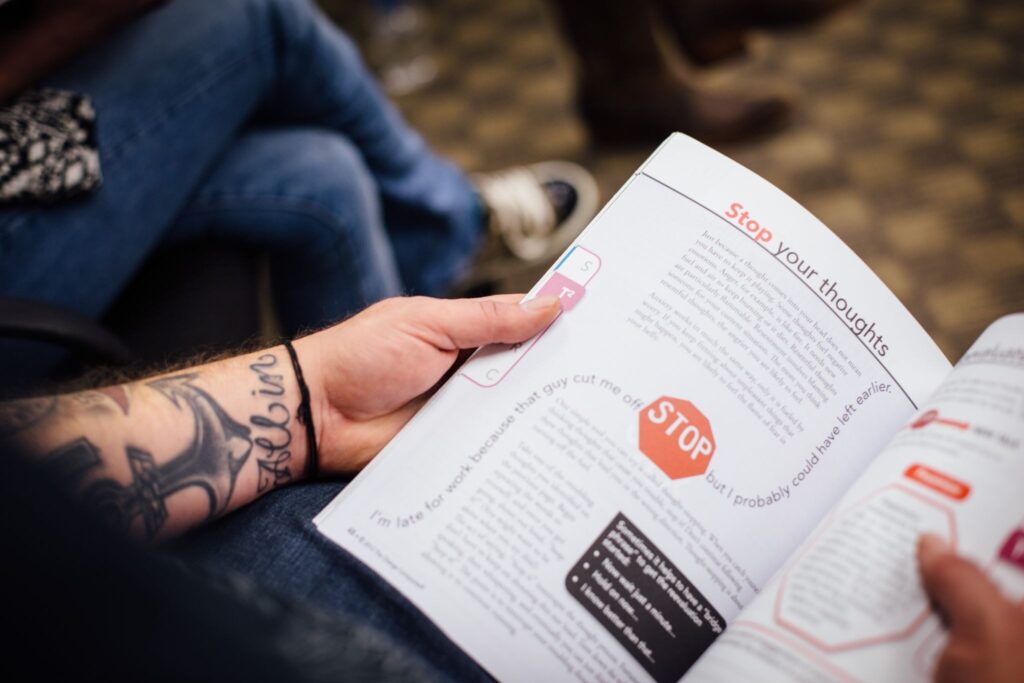
Intuition is often a quieter form of internal guidance. It may come from past experiences, subtle observations, values, and pattern recognition. It does not usually demand immediate action or create a spiral of panic.
A simple way to think about it:
- Anxiety asks: “What if something goes wrong?”
- Intuition says: “Pay attention to this.”
- Anxiety pushes: “Do something right now so you can feel safe.”
- Intuition guides: “This matters. Slow down and listen.”
Both can be useful. Anxiety can alert you to danger or show you where you feel unsafe. Intuition can help you recognize alignment, boundaries, and decisions that feel consistent with who you are. The goal is not to silence your inner experience. The goal is to understand it more clearly.
How Anxiety Feels in the Body
Anxiety often shows up through physical symptoms. According to the National Institute of Mental Health, anxiety disorders can involve symptoms such as restlessness, difficulty concentrating, sleep problems, and physical tension. The Cleveland Clinic also lists symptoms such as heart palpitations, shortness of breath, muscle tension, sweating, nausea, and trouble sleeping.
Anxiety may feel like:
- A racing heart
- Tightness in the chest
- Shallow breathing
- Sweating or trembling
- Stomach knots or nausea
- Muscle tension in the jaw, neck, or shoulders
- Restlessness or inability to sit still
- A sense that something bad is about to happen
These sensations can feel convincing because they are happening in the body, not just the mind. When anxiety activates the fight-or-flight response, your body may respond as if danger is present, even when you are physically safe.
That is one reason anxiety can be so hard to separate from intuition. The body feels activated, and the mind tries to explain why.
How Intuition May Feel in the Body
Intuition can also be felt in the body, but it usually has a different quality than anxiety. It may feel quieter, more grounded, or less frantic.
Intuition may feel like:
- A calm gut feeling
- A steady sense of clarity
- A pause or inner “no”
- A feeling of alignment
- A subtle pull toward or away from something
- Openness in the body instead of contraction
- A clear signal that does not require constant mental debate
Intuition does not always feel comfortable. Sometimes it may point you toward a hard conversation, a necessary boundary, or a decision that requires courage. But it usually does not create the same escalating panic, rumination, or physical urgency that anxiety does.
A helpful question is:
Does this feeling become clearer when I slow down, or does it become louder and more frightening the more I think about it?
If the feeling becomes more frantic, it may be anxiety. If it remains steady after rest, grounding, and reflection, it may be intuition.
Anxiety-Driven Thoughts vs Intuitive Clarity
One of the clearest ways to tell anxiety and intuition apart is to notice the thought pattern.
Anxiety often sounds like:
- “What if this goes wrong?”
- “What if I make the wrong choice?”
- “What if they leave?”
- “What if I embarrass myself?”
- “What if I cannot handle this?”
- “I need to figure this out right now.”
- “If I do not act, something bad will happen.”
Anxiety can create mental loops that do not resolve. You may analyze the same situation repeatedly, search for reassurance, replay conversations, or imagine worst-case outcomes. Even after getting an answer, the relief may only last a short time before the worry returns.
Intuition often sounds different. It may be more direct and less repetitive:
- “This does not feel right.”
- “I need more time.”
- “This matters.”
- “I should pay attention.”
- “I feel clear about this.”
- “This choice aligns with what I value.”
Intuition does not usually demand constant reassurance. It does not need to argue its case for hours. It may simply remain present, especially when your body and mind are calm enough to listen.
How Anxiety Affects Decision-Making
Anxiety can make decision-making feel urgent and unsafe. When anxiety is driving the process, the goal often becomes relief, not clarity.
Anxiety may lead you to:
- Avoid something important because it feels scary
- Say yes when you want to say no
- End a relationship, opportunity, or commitment impulsively
- Stay in a situation because change feels too overwhelming
- Ask for repeated reassurance without feeling settled
- Make decisions based on the worst possible outcome
- Delay a decision because every option feels dangerous
For example, someone may turn down a meaningful opportunity because anxiety says they will fail. Another person may stay in a harmful pattern because anxiety says being alone would be worse. In both cases, anxiety narrows the decision-making process around fear.
This is why anxiety can be so exhausting. It often asks for certainty in situations where certainty is not possible.
How Intuition Supports Decision-Making
Intuition can support decision-making by helping you notice what feels aligned, safe, honest, or important. It is not a replacement for thoughtful reflection, facts, or professional guidance. But it can be a meaningful part of the decision-making process.
Intuition may help you recognize:
- A boundary that needs to be set
- A relationship pattern that feels unhealthy
- A decision that aligns with your values
- A need to pause before moving forward
- A sense that something deserves more attention
- A direction that feels steady, even if it is not easy
The strongest decisions often come from both reflection and internal clarity. You gather information, slow down, consider the risks, and listen to what remains steady after the fear settles.
Some decision-making research suggests that emotion and bodily feedback can influence choices, especially in complex or uncertain situations. That does not mean every body signal is automatically intuition. It means the body and mind work together, and both deserve careful attention.
Why Trauma Can Make Anxiety Feel Like Intuition
Trauma can make the difference between anxiety and intuition harder to recognize.
When someone has experienced trauma, betrayal, instability, addiction, loss, or prolonged emotional stress, the nervous system may become more sensitive to danger. The brain can begin scanning for signs that something bad may happen again. This can make anxiety feel like a gut instinct.
For example, a person with past relational trauma may feel intense fear when someone takes longer to reply. The body may interpret the delay as abandonment, rejection, or danger. In that moment, anxiety may say, “I knew something was wrong.” But the signal may be coming from a past wound, not the current situation.

Trauma can also make safe situations feel unsafe. It can cause someone to misread neutral cues, assume negative intent, or feel urgency around decisions that need time.
This does not mean your feelings are wrong. It means your nervous system may be trying to protect you based on what you have already lived through.
Supportive treatment can help you separate present reality from past fear. At Scottsdale Providence Recovery Center, we provide trauma-informed care through evidence-based modalities that may include EMDR, CBT, DBT, somatic approaches, and other therapeutic supports. Learn more about our approach on our treatment modalities page.
When Anxiety Becomes More Than Occasional Worry
Everyone experiences anxiety at times. Anxiety becomes more concerning when it starts interfering with daily life, relationships, work, school, recovery, sleep, or the ability to function.
You may benefit from professional support if anxiety:
- Feels constant or difficult to control
- Causes panic attacks
- Interferes with sleep
- Makes it hard to make decisions
- Leads to avoidance
- Creates repeated reassurance-seeking
- Causes physical symptoms that feel overwhelming
- Makes you feel disconnected from yourself
- Worsens after trauma, substance use, or major life stress
- Makes it difficult to trust your own thoughts and feelings
For some people, anxiety also occurs alongside depression, PTSD, substance use, or other mental health concerns. In those cases, dual diagnosis treatment may be important because both mental health and substance use patterns can affect how a person experiences fear, self-trust, and decision-making.
What Can Help You Tell the Difference?
You do not have to decide immediately whether a feeling is anxiety or intuition. In many cases, the most helpful step is to slow the process down.
Try asking yourself:
- Is this feeling urgent, or is it steady?
- Am I reacting to the present moment or a past experience?
- Does this thought repeat without resolution?
- Do I feel clearer after grounding, or more panicked?
- Am I trying to make a decision to feel safe right now?
- What facts do I actually have?
- What would I think if I were not afraid?
- Does this choice align with my values?
You can also use simple grounding tools:
- Take slow, steady breaths.
- Name five things you can see.
- Place your feet on the floor.
- Write the fear and the facts in separate columns.
- Wait before making major decisions when you feel activated.
- Talk through the situation with a trusted therapist, sponsor, mentor, or support person.
These tools do not dismiss your feelings. They help you create enough space to understand them.
Treatment and Support for Anxiety
Anxiety is treatable. If anxiety is making it hard to trust yourself, therapy can help you understand your patterns, regulate your nervous system, and build healthier coping skills.
Evidence-based treatment for anxiety may include cognitive behavioral therapy, dialectical behavior therapy, exposure-based approaches, trauma therapy, mindfulness skills, medication support when appropriate, and lifestyle changes that support emotional regulation. The American Psychological Association describes cognitive behavioral therapy as a treatment approach that helps people understand the connection between thoughts, feelings, and behaviors.
At Scottsdale Providence Recovery Center, we provide mental health treatment in Scottsdale for adults facing anxiety, depression, trauma, bipolar disorder, PTSD, substance use concerns, and co-occurring disorders. Our treatment plans are individualized, evidence-based, and focused on helping clients build stability, insight, and long-term wellness.
For people who need structure while maintaining parts of daily life, our outpatient mental health treatment programs may provide a supportive path forward.
Anxiety vs Intuition: Which One Should You Trust?
The goal is not to treat every anxious feeling as false or every gut feeling as truth. The goal is to understand the pattern.
Anxiety often feels urgent, repetitive, and fear-driven. It usually pushes for immediate relief or certainty.
Intuition often feels quieter, clearer, and more grounded. It may still ask something difficult of you, but it does not usually create panic or mental chaos.
If your inner world feels loud, confusing, or dominated by fear, that does not mean you are broken. It may mean your nervous system needs support. With the right treatment, you can learn to slow down, recognize what is happening, and rebuild trust in yourself.
If anxiety is making it hard to think clearly, make decisions, or feel steady in your own life, contact Scottsdale Providence Recovery Center today. We can help you explore your options and find the level of support that fits your needs.
Editorial Writer - Victoria Yancer
Clinical Reviewer - Daniel Nichols LCSW.